

Colorado State University Athletics
Thursday, June 11
Eugene, Ore.
Colorado State

vs

NCAA Outdoor T&F Championships
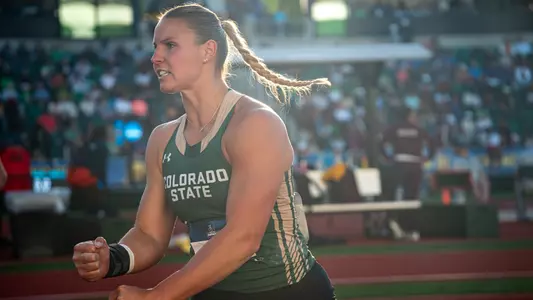
Long Earns Second-Team All-American Honors
6/11/2026 9:35:00 PM | Track & Field
Garrison guts out a race she fought to earn
EUGENE, Ore. – Each throw was a build.
After the first two, Makayla Long would work her way to the edge of the track to find coach Brian Bedard. She was quick to tell him what she felt was off, and her veteran coach was quick to agree, adding a bit of encouragement each time with a slap on the back for emphasis.
On her third attempt, Long made a jump in distance – throwing a 17.07, surpassing 17 meters for the 10th time in a remarkably consistent season. It felt good, like the lessons of the first two throws came together, and she hoped it would be enough. She got down in a crouch to watch the board, waiting for the mark to appear. When it did, it reaffirmed her belief, and more than that, it gave her hope.
The distance had put her in ninth place – the final spot to make the finals. Then a minute later, it wasn't. Nebraska's Mine De Klerk hit 17.87 as the second-to-last thrower, sliding Long down to 10th.
It made her a second-team All-American for the second time this season – having done so during the indoor campaign. It was a better finish than what she was seeded for, but as a competitor, she wanted more.
"I thought that everyone was already in front of me, but I didn't realize the girl from Nebraska was behind me," Long said. "So, I had hope, and then it takes it away, but you can't leave it up to chance at these meets. You've got to execute, and you've got to go take it, so you can't hope for it, and that's what happened in that moment."
It was a tough field, including Olympians, and Long was among them, marking a fourth consecutive season the team has had an All-American in the event, the 10th time in program history. Bedard was hoping that last throw could have been her first, the one from which she could build. He also figured she would need an A+ effort to advance, and she came up just shy.
But only this one particular evening. The scope of her season was remarkable to him.
"Just a phenomenal year for her -- consistency, improvement, personal records in every event," Bedard noted. "One of the most phenomenal conference meets of somebody we've had in a long time, as far as what she did in three events, lifetime bests in all three, scored a ton of points for our team. She was the high scorer for our team.
"I think she should have been in the running for the high-point person. I couldn't ask for a better senior year. I mean, she'd obviously want first team All-American, but it is what it is. That's a tough field out there. It was really good competitors."
Which is where Long sat after needing a second moment Thursday night. The Baylor transfer had to have time to let the immediate sink in before the overall could fill the space.
She then came to the rational conclusion what she put together was a calendar of personal growth. Of accomplishment.
"You reflect back. Even last year my best mark was 17.03, and I hit it once. I didn't make it to either indoor or outdoor nationals, so to come in this year and make indoor nationals with a 17.69, top-two at CSU, and then outdoor nationals, go through regionals and make outdoor nationals finally, and come back here to wrap it up, it's pretty special," she said. "Even though I didn't make the final you can't be … You've got to just be grateful for everything. It could be worse. I could be last. So to be 10th in the country, that's pretty good, so I'll take it. I'm obviously disappointed, but that's life."
Colorado State's first competitor of the day was Catherine Garrison, but instead of carrying her normal confidence out onto the track for the 3,000 steeplechase, she was dealing with a sense of doubt stemming from the unknown, all of it related to her right ankle.
Two weeks ago, as she earned her national qualification at regionals with a time nearly identical to the one she ran at the Mountain West Championships. That was an accomplishment considering on the first water barrier at regionals, she tweaked her ankle. It didn't feel bad during the race, but afterward, she and thee staff knew something was wrong.
So wrong, in fact, there was concern about her being able to run at nationals. Medical tests and staff determined she could not do further damage, so her appearance came down to one question – could she handle the pain.
After spending most of the past two weeks in a boot, Garrison was determined to give it a go for good reason. This is her last outdoor season and her first trip to thee championships. She was going to give it a go.
She just didn't know what she had to give physically, and entering the track, it became clear to her early on the pain was a bit different. It was going to affect her stride particularly, and she was going to feel it flair up though the 28 barriers and seven water jumps.
Her heat, the second, went out fast and thee way she was feeling, the race changed from an effort to qualify for the finals to one of pride.
"I think immediately. I was pretty much detached from the group by the first 400 almost, maybe 600," she said. "And by then, it was feeling so hard, and my ankle was not feeling good, so I was, like, I'm just going to try and stick it out."
Coaches watch races looking for certain things, but the way Kelly Hart knew she was going to view Garrison changed immediately as well. She knew the transfer from William and Mary carried a toughness with her ability, a trait which she only felt was amplified in the race.
"She's just been able to get in this headspace of just being grateful that she still gets a chance to run. If you had been around her the past couple of days, you wouldn't know, just talking to her, that she was dealing with this," said Hart, who is very much looking forward to coaching her during cross country and the indoor season. "She's just had the attitude that she's at nationals ready to compete. It's been actively everything's normal. That toughness to mentally not get caught up on what could have been or what should have been or if it's fair. She's spent no energy saying where it should have been.
"She's just been, 'OK, this is the reality and I'm going to make the most of it.' I'm just so proud that she wears our jersey and represents CSU because I think you'd want people to be like her."
Garrison said a couple of times during the race she wondered if she should drop out as the pain intensified. Then she remembered where she was and how hard she had worked to get here. The 10:57.37 will soon be a memory because of the why -- the fact she posted a time and not a DNF (did not finish).
Her last two laps, the crowd could sense something was off for her and applauded her for encouragement. At the end, North Carolina State's Angelina Napoleon – someone she got to know racing against her on the East Coast and particularly while waiting for two hours together for a drug test the last time she raced at Hayward in a U20 event, walked up to her, threw her arm around Garrison's shoulder and walked off the track with her.
A moment of sportsmanship from someone who didn't know exactly what her foe was going through, but Garrison did. Which is why she kept going.
"I was kind of like, well, I don't know. I'm already in it," Garrison started. "I want to say I raced at nationals, and I want to push through and at least finish. I think that's the worst steeple I've ever ran, the slowest time ever, maybe, even from my first. But I don't know.
"I'm just happy to have been able to finish, and it's not exactly the finish I wanted to my career, but at least I got out there and went for it."
After the first two, Makayla Long would work her way to the edge of the track to find coach Brian Bedard. She was quick to tell him what she felt was off, and her veteran coach was quick to agree, adding a bit of encouragement each time with a slap on the back for emphasis.
On her third attempt, Long made a jump in distance – throwing a 17.07, surpassing 17 meters for the 10th time in a remarkably consistent season. It felt good, like the lessons of the first two throws came together, and she hoped it would be enough. She got down in a crouch to watch the board, waiting for the mark to appear. When it did, it reaffirmed her belief, and more than that, it gave her hope.
The distance had put her in ninth place – the final spot to make the finals. Then a minute later, it wasn't. Nebraska's Mine De Klerk hit 17.87 as the second-to-last thrower, sliding Long down to 10th.
It made her a second-team All-American for the second time this season – having done so during the indoor campaign. It was a better finish than what she was seeded for, but as a competitor, she wanted more.
"I thought that everyone was already in front of me, but I didn't realize the girl from Nebraska was behind me," Long said. "So, I had hope, and then it takes it away, but you can't leave it up to chance at these meets. You've got to execute, and you've got to go take it, so you can't hope for it, and that's what happened in that moment."
It was a tough field, including Olympians, and Long was among them, marking a fourth consecutive season the team has had an All-American in the event, the 10th time in program history. Bedard was hoping that last throw could have been her first, the one from which she could build. He also figured she would need an A+ effort to advance, and she came up just shy.
But only this one particular evening. The scope of her season was remarkable to him.
"Just a phenomenal year for her -- consistency, improvement, personal records in every event," Bedard noted. "One of the most phenomenal conference meets of somebody we've had in a long time, as far as what she did in three events, lifetime bests in all three, scored a ton of points for our team. She was the high scorer for our team.
"I think she should have been in the running for the high-point person. I couldn't ask for a better senior year. I mean, she'd obviously want first team All-American, but it is what it is. That's a tough field out there. It was really good competitors."
Which is where Long sat after needing a second moment Thursday night. The Baylor transfer had to have time to let the immediate sink in before the overall could fill the space.
She then came to the rational conclusion what she put together was a calendar of personal growth. Of accomplishment.
"You reflect back. Even last year my best mark was 17.03, and I hit it once. I didn't make it to either indoor or outdoor nationals, so to come in this year and make indoor nationals with a 17.69, top-two at CSU, and then outdoor nationals, go through regionals and make outdoor nationals finally, and come back here to wrap it up, it's pretty special," she said. "Even though I didn't make the final you can't be … You've got to just be grateful for everything. It could be worse. I could be last. So to be 10th in the country, that's pretty good, so I'll take it. I'm obviously disappointed, but that's life."
Colorado State's first competitor of the day was Catherine Garrison, but instead of carrying her normal confidence out onto the track for the 3,000 steeplechase, she was dealing with a sense of doubt stemming from the unknown, all of it related to her right ankle.
Two weeks ago, as she earned her national qualification at regionals with a time nearly identical to the one she ran at the Mountain West Championships. That was an accomplishment considering on the first water barrier at regionals, she tweaked her ankle. It didn't feel bad during the race, but afterward, she and thee staff knew something was wrong.
So wrong, in fact, there was concern about her being able to run at nationals. Medical tests and staff determined she could not do further damage, so her appearance came down to one question – could she handle the pain.
After spending most of the past two weeks in a boot, Garrison was determined to give it a go for good reason. This is her last outdoor season and her first trip to thee championships. She was going to give it a go.
She just didn't know what she had to give physically, and entering the track, it became clear to her early on the pain was a bit different. It was going to affect her stride particularly, and she was going to feel it flair up though the 28 barriers and seven water jumps.
Her heat, the second, went out fast and thee way she was feeling, the race changed from an effort to qualify for the finals to one of pride.
"I think immediately. I was pretty much detached from the group by the first 400 almost, maybe 600," she said. "And by then, it was feeling so hard, and my ankle was not feeling good, so I was, like, I'm just going to try and stick it out."
Coaches watch races looking for certain things, but the way Kelly Hart knew she was going to view Garrison changed immediately as well. She knew the transfer from William and Mary carried a toughness with her ability, a trait which she only felt was amplified in the race.
"She's just been able to get in this headspace of just being grateful that she still gets a chance to run. If you had been around her the past couple of days, you wouldn't know, just talking to her, that she was dealing with this," said Hart, who is very much looking forward to coaching her during cross country and the indoor season. "She's just had the attitude that she's at nationals ready to compete. It's been actively everything's normal. That toughness to mentally not get caught up on what could have been or what should have been or if it's fair. She's spent no energy saying where it should have been.
"She's just been, 'OK, this is the reality and I'm going to make the most of it.' I'm just so proud that she wears our jersey and represents CSU because I think you'd want people to be like her."
Garrison said a couple of times during the race she wondered if she should drop out as the pain intensified. Then she remembered where she was and how hard she had worked to get here. The 10:57.37 will soon be a memory because of the why -- the fact she posted a time and not a DNF (did not finish).
Her last two laps, the crowd could sense something was off for her and applauded her for encouragement. At the end, North Carolina State's Angelina Napoleon – someone she got to know racing against her on the East Coast and particularly while waiting for two hours together for a drug test the last time she raced at Hayward in a U20 event, walked up to her, threw her arm around Garrison's shoulder and walked off the track with her.
A moment of sportsmanship from someone who didn't know exactly what her foe was going through, but Garrison did. Which is why she kept going.
"I was kind of like, well, I don't know. I'm already in it," Garrison started. "I want to say I raced at nationals, and I want to push through and at least finish. I think that's the worst steeple I've ever ran, the slowest time ever, maybe, even from my first. But I don't know.
"I'm just happy to have been able to finish, and it's not exactly the finish I wanted to my career, but at least I got out there and went for it."


Players Mentioned

Distance
/ Track & Field
Throws
/ Track & FieldThursday, May 21
Saturday, March 07
Saturday, March 07
Thursday, March 05