
A Story of Her Own Telling
Not concerned with no’s, Grace has consistently fallen forward
Mike Brohard
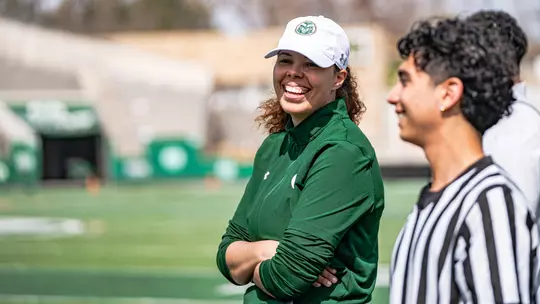
After living a bit under a microscope her first few years in the profession, a simple question in a press conference let Mickey Grace know she had finally reached the point where she was no longer a unicorn, but simply a member of Jim Mora’s staff.
Not a woman. Not the only female on-field coach at the FBS level. Just a coach on the staff.
His response was an unexpected blessing.
Mora, then at Connecticut, was asked how Grace was doing. Immediately, his thoughts went to concern, looking toward his communications staff to see if something had happened to Grace he had not been made aware of yet. It was nothing like that, just a query about how she was fitting into a male-dominated field.
“The idea that I'm an anomaly is gone now. Now I'm just a staff member,” Grace said of Mora’s reaction. “He was concerned about a staff member on the staff. And so that was a moment where the movie of my life, the song started, the montage started, where there's no more talking. It's just work. And so that was it.
“It was a beautiful moment that I'm grateful to him to even just not consider me anything other than one of his coaches on his staff.”
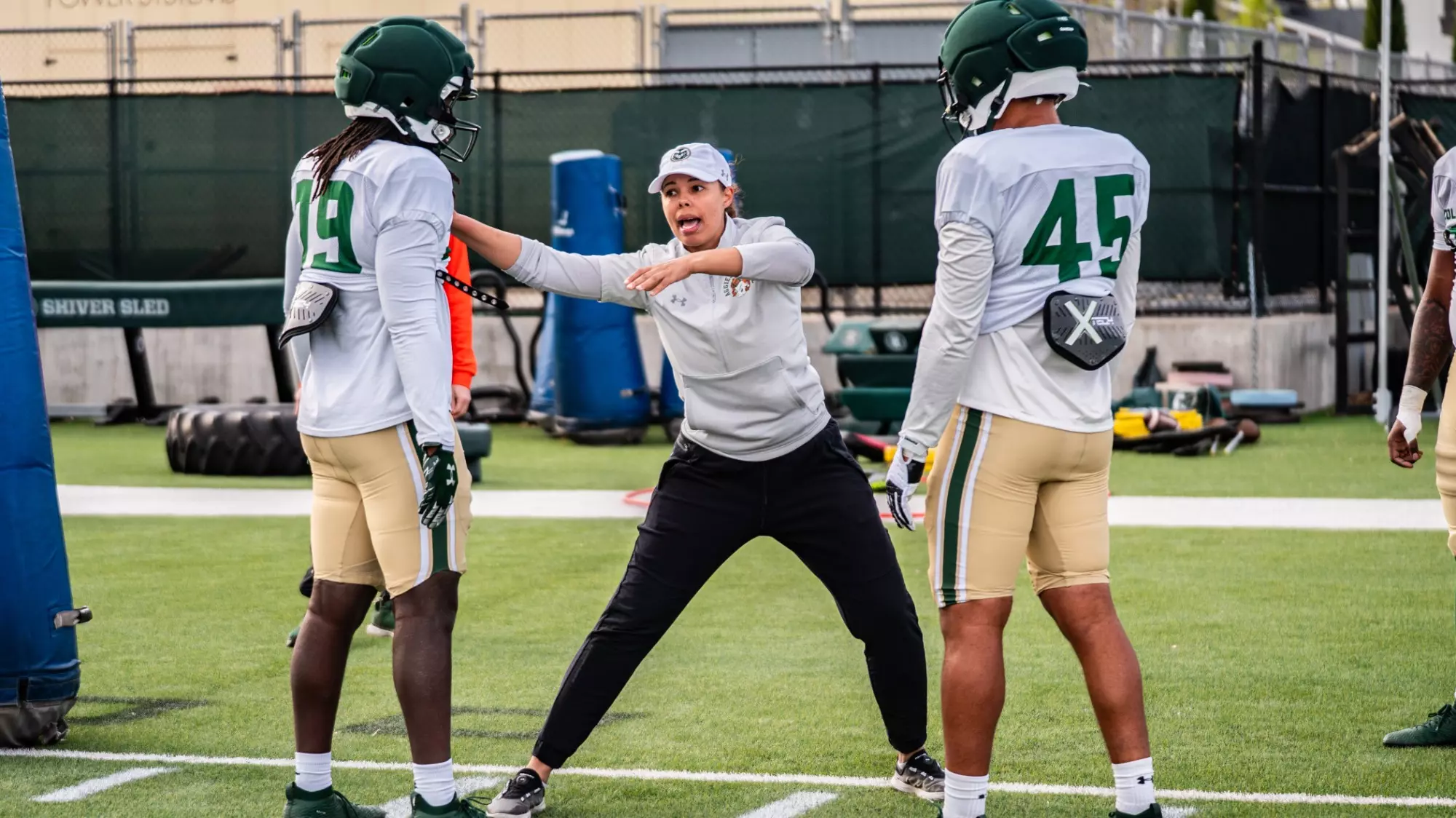
Nothing to see here. Simply an assistant defensive line coach, someone who had worked their way through the ranks and earned the spot. A pass-rush specialist trying to teach her players the best way to work around an offensive lineman and create havoc.
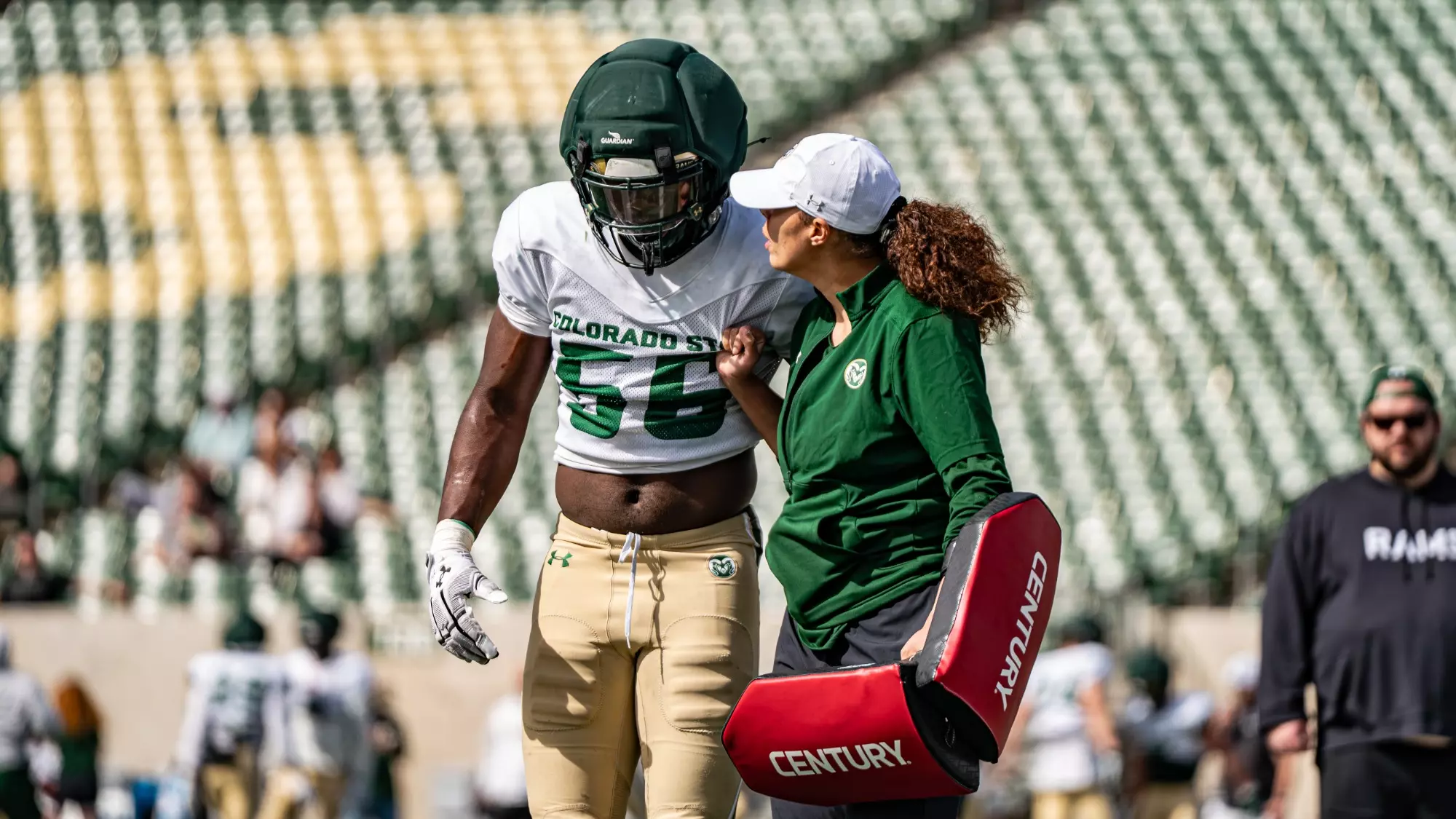
Nothing more. Nothing less. Make no mistake, her players see the woman in her. The wife and mother. She has that on full display and doesn’t shy away from it, but on the field, they see her as their coach.
At the heart, coaches are teachers. The best of them go beyond the subject matter and explore the whole person. To understand the best way to get the message across. To help them reach goals, on the field and in life.
“With her being a woman, I never really even looked at it as I go. She's fun,” said Eric Watts, a former pupil now playing for the New York Jets. “I just see her as my coach. She coached me and she knows what she's talking about. If you sit down and talk to her, she’ll talk ball with you and you'd be like, ‘OK.’ You can tell pretty quickly who knows ball, who doesn’t know ball, knows what they're talking about.
“And then also a big thing with me, like my coaches, I want somebody who's coaching me. I want the best for me. Just talking with her, if it's football, not football … She's a good person, good support and whatever she's telling me, I'm going to listen to.”
Grace understands the viewpoint she’s a trailblazer. She’s not exactly sure any young women should follow her path, as it was one no one had ever undertaken prior. So follow her way, just don’t retrace each step. Every path is different, and she is willing to help the next generation.
Her way into football was through a steady stream of asking to be part of something and not worrying about hearing no. Keep asking until somebody says yes. To anything.
She played the game in high school, back in her hometown of Philadelphia. She tried out for kicker, realizing the team didn’t use one, but it would open a door that led to her hanging out with the linemen – both offense and defense – and playing defensive end.
After graduation, she stuck around to work with the team, but it took her three years and a random parent calling her “Coach,” before she realized that was exactly what she was. She wasn’t just an alumnus filling space by helping, volunteering. She was mentoring.
She was set to be a Bill Walsh Fellow for the Los Angeles Rams when the pandemic hit, and in a sudden switch, she found herself part of the scouting interns. One thing would lead to another, all of which led Grace to where she is now.
Being told no didn’t matter. Keep asking until somebody agrees.
Such as the second high school where she applied.
“I had decided in 2015 that I was going to coach football, and that's what I was going to do, no matter what. And the only plan B was going to be to rework plan A, and I'll fall where I need to fall,” Grace said. “And hopefully, if I shoot high enough, I'll fall amongst the stars. That was really what drove me to keep kind of maneuvering and finding my way. And I've got a lot of doors slammed in my face and I was told no a lot of times. I didn't concern myself with the no's. I think that was something that I was really good about not concerning myself with no's, because a lot of times the no's weren't personal.
“The no's weren't because I wasn't qualified, because sometimes I wasn't. The no's had nothing really to do with me as a person, but they also could distract me from finding the yes. I wasn't going to beat a no down until it became a yes. I just took my job and took everything I had and went to go find a yes. And when I found a yes, I gave it everything I got.”
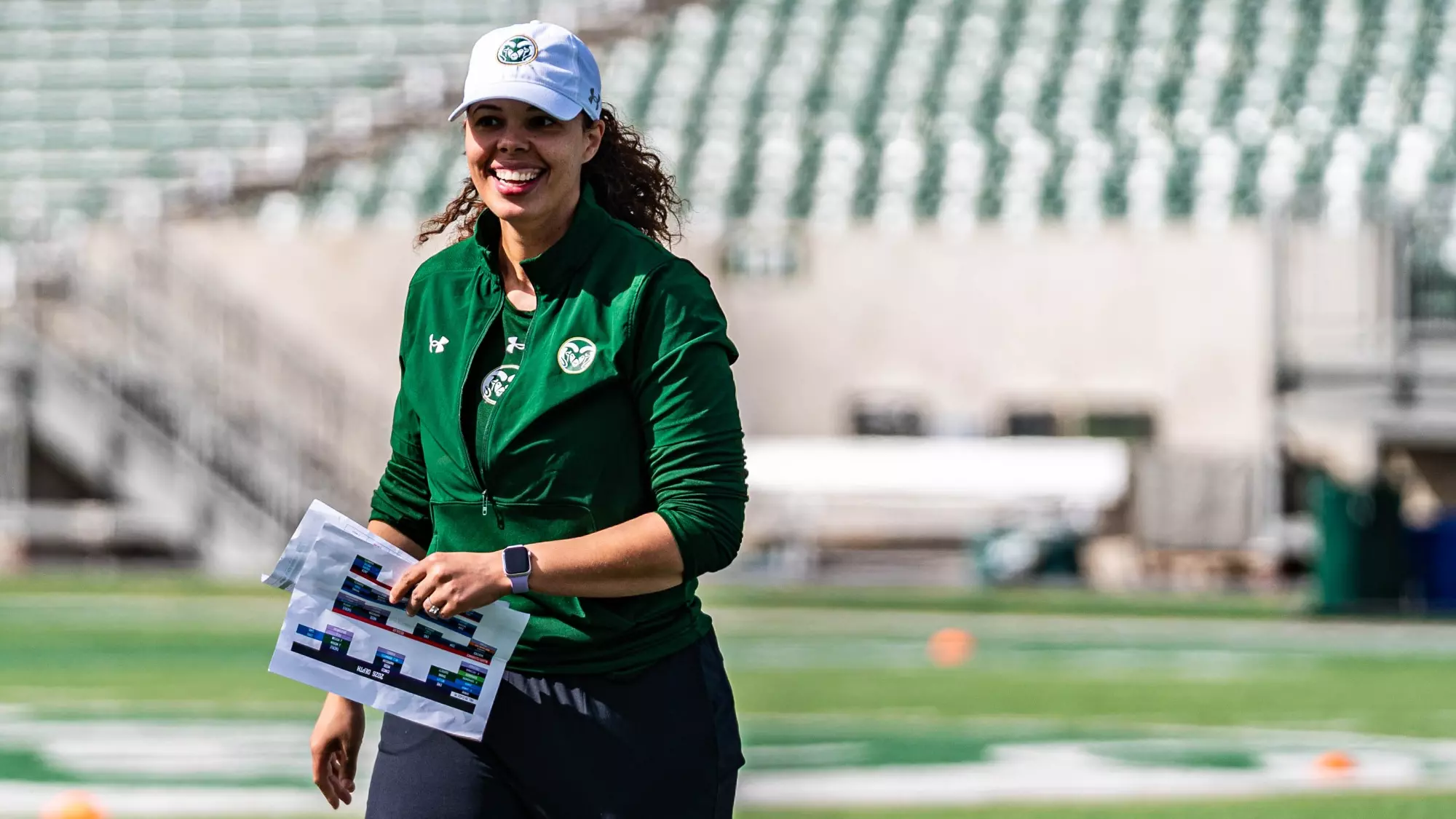
If plays were being drawn up on cards, she’d ask to draw up some of her own. One, as a learning tool for her, second, to make sure she was doing it right. The job switch with the Rams was used to learn how to evaluate players, another space where she could ask questions, and Grace was never without one.
And the only plan B was going to be to rework plan A, and I'll fall where I need to fall.Mickey Grace
Every door opened was a chance to advance, even if she didn’t see the path to where clearly. She held faith it was going to lead her closer to where she wanted to land. Over time, she stopped believing she had to be overqualified to apply for a position, just be herself, willing to take on any task which could be learned.
The gig with the Rams gave her contacts which gave her an in at Dartmouth. There, the team won an Ivy League championship. She kept pushing forward, and when word came Mora was set to take over UConn, all of her contacts out West told her to reach out as he set up camp again out East.
Which she did, and it’s a story which Grace laughs about because every time Mora tells it, it changes – and none of them are accurate.
“Coach Mora tells the story of how we met and it is a complete fabrication. It has gone so far, and honestly, it gets worse and worse as he tells it,” she said, laughing. “It has now snowballed. I've heard a version of it that was absolutely crazy.”
When Mora talks about the initial meeting, he starts with a qualifier.
“This will be disputed by Mickey,” Mora starts. “This is how I remember it. When I got the Connecticut job, I kept getting these texts from this person called Mickey, and I didn't know if it was a male or a female. It didn't matter. You get hundreds and hundreds and hundreds and hundreds of texts. And you kind of prioritize how you return them, and usually it's people you have a relationship with, you know well, that you have a past with. So I never really returned any of Mickey's texts, but I did have a guy named Kenny McClendon on my radar.
“So I was able to hire Kenny. And when he came into work, I was sitting in my office one day. Mickey's going to dispute all of this. She'll give you her version, but all I remember is this woman walking into my office and going, ‘Hey, Mora, how come you've never returned any of my texts?”
For clarity, McClendon was Grace’s fiancé at the time, now her husband of two years. Grace will tell you she was nowhere near that blunt in her introduction.
“When you get a job, you get a thousand texts and a thousand emails. So he doesn't know who came from what, what's on first, who's on third. So he just didn't get back to me, which is fair. It was cold text messages,” Grace said. “But I did go up to help Kenny move into his office, and I was just a young coach, and so you start looking at all the name tags on all the doors, and I get down the hall, and I see that Coach Mora is in his office at his desk. No one else is there, but Coach Mora is at his desk. So I just knocked on the door, and I said, “Coach Mora, can I introduce myself?’
“What I also didn't want to happen was, hey, go to text the coach's wife, and then find a thread of my resume and cold texts to the new head coach at UConn, and be like, what happened? So I just wanted to introduce myself to break the ice on that, and he was kind of just like, ‘who are you? What? What do you do? Why are you wearing all this Dartmouth gear? What are you talking about?’ He could not get that I was trying to explain that I had just won the Ivy League championship, and I was an active defensive line coach there.”
She remembers Mora being a bit baffled about why one of his coach’s fiancées would walk in and explaining texts he didn’t recall, but he was nice.
Deep down, Grace was a bit stung because McClendon got a call to fill a spot she had been trying to get herself.
“And then my fiancé gets a call like, hey, guess who called me today? And I was like, no way. It's no way. But it was perfect. It all worked out the way it was supposed to.”
The next real meeting they had they agree on. It came at a time when football was changing with the transfer portal, and Mora was building a roster at UConn. A lot of evaluation was taking place, preps and transfers alike, and his coaches all had their opinions on players and how to build a roster in the new age. Then Mora asked Grace, independently, to evaluate a list of five players. She remembers having an order reversed from the consensus.
The important part to Mora was the why.
“When it came time for her evaluation, whether it was right or wrong, it didn't make any difference. It was that she had conviction about what she said,” Mora said. “She had a reason for feeling the way she did about it. She could explain it. She didn't just say, ‘I don't like him or I do like him.’ This is why I like him. This is what I don't like about the way he plays, and it was impressive. She was an impressive person.
“So I hired her. It was independent of Kenny. I just wanted her on the staff. I've known her now almost going on five years, and I think every day I'm more and more impressed with her.”
He’s not just talking about the coach. He also means the wife and the mother. Really, it’s a combination of all the roles Grace performs, which also includes her role as the Director of Player Development.
It’s not lost on the players, either, that they are witnessing a strong marital relationship in real time between her and McClendon and their raising of two daughters. The youngest just turned 1-year old last week, and the players all know she has a schedule for breast pumping to feed her child. While she acknowledges she has been under a microscope as a female coach, she has embraced being a woman. Her favorite color is pink, so she wears it. She likes glitter so she’s leaned into her femininity instead of pushing it aside.
One of Watts’ favorite stories has nothing to do with football, or Grace as a coach, but as a wife. At a gathering with players where they were going to be at a pool, she asked McClendon to bring out towels. He grabbed the nice bathroom towels.
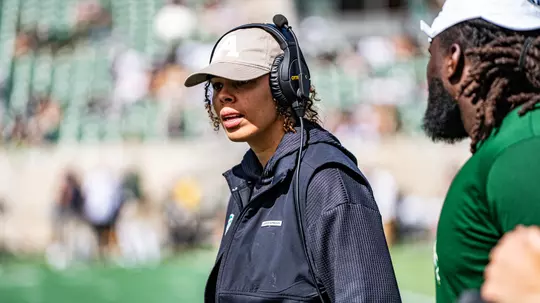
“She was kind of getting on him a little bit,” Watts said with a smile. “He just was like, ‘I'm sorry, I just grabbed towels,’ and the look on his face when she was getting up ...”
Grace likes who she has become, and she has in turn become a role model beyond her duties as a coach.
“I would say she's probably one of the strongest influences I've had in my life since I came and started playing college football. Again, it's just like the thing I've said over and over, almost like another version of my mom that I actually have with me here and just someone I can always look up to, talk to,” defensive end Brandon Kelley said. “Again, just on and off the field, everywhere, every aspect of life. In my life, my life is just football and family right now. Again, it just fits inside really well.
“Again, the things she teaches us and the kind of classes or the meetings we have outside of football time, it reminds me of a lot of the lessons my parents teach me or advice they give me, so it's really good.”
Grace is starting her sixth season in college football, and a lot of what she learned playing at Germantown High School, many of them lessons she taught herself, she still uses to this day as she instructs this generation of players. Not every step was calculated, some of them happened by chance. She’s grateful for all of them.
She’s earned a reputation as a tough coach with a caring demeanor. She will critique, but from a place of love. She tells her players what they need to hear, not what they want to hear. But deep down, they know. She cares for them deeply, but sugarcoating the message isn’t going to happen.
“I would say it was when I was like a month or two after being on campus my freshman year, and she got me and another player (Cleto Chol) and she basically told us that we had to really get our stuff together and make sure we lock in because there's things we're lacking,” Kelley said. “So, she sat us down, told us what it takes and what we need to improve on and why we needed to and what the consequence could be if we didn't. But it was a very real and close, honest moment. Like, OK, she's looking out for me, like she wants the best for us. She's very real. She kept it real; if you don't lock in, like there's not going to be anything for you kind of thing.
“I'll be honest. At first I was like, I don't know, I was kind of stubborn about it, like what she's talking about. But I'll say maybe a day or two after I really thought about it, I'm like, OK, she's right. It took some time after that still, but it definitely impacted me pretty quickly.”
When Grace gets a text from a random female, she does answer it. She’s taken it a step farther by creating a group where women in football share ideas and experiences, pass along lessons and job openings and simply talk about the life and the journey.
The name of the group wasn’t by happenstance.
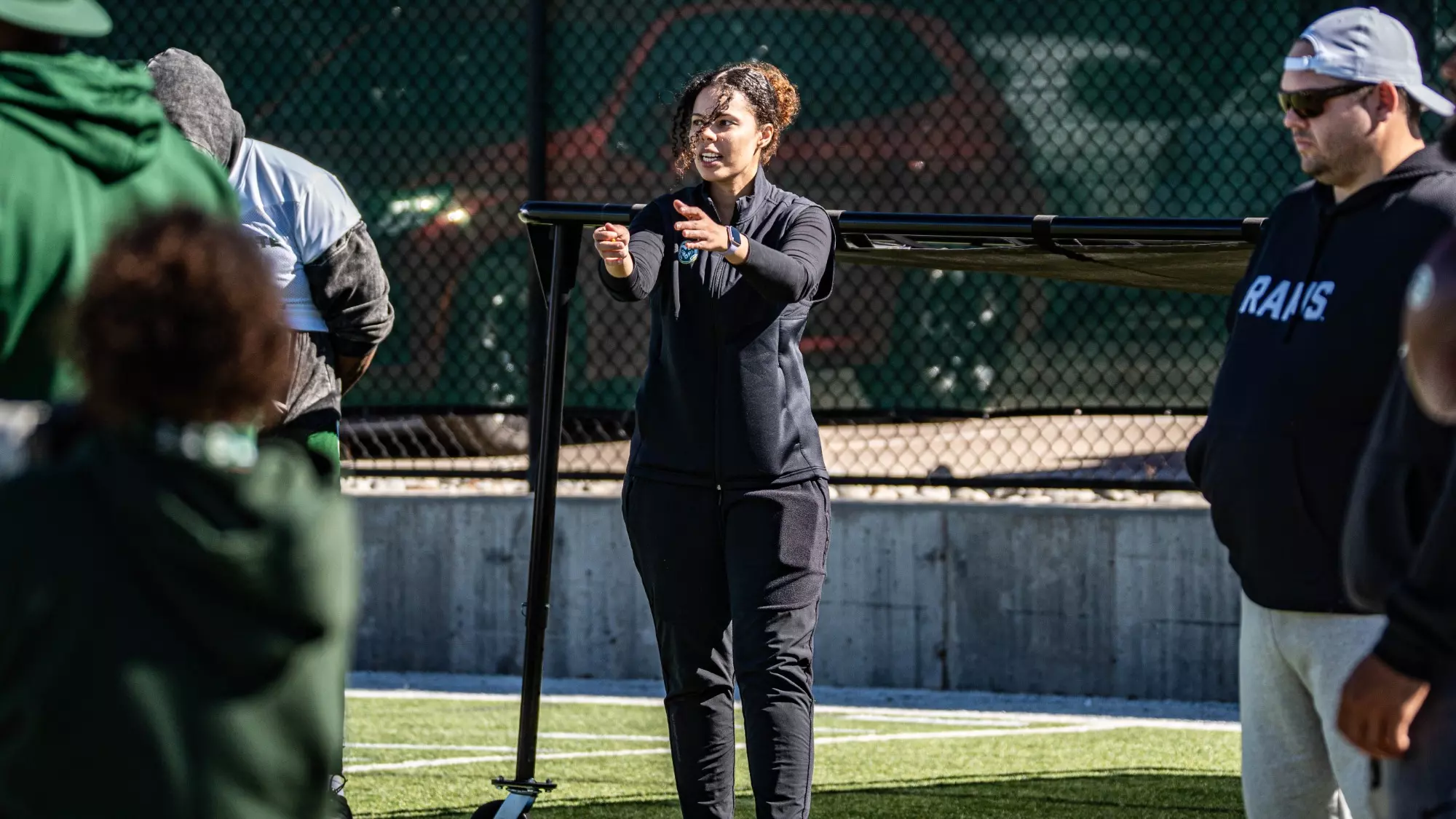
“Sometimes people want the playbook, and I was just falling forward the whole time. And so I fell forward,” Grace said. “That's actually what the group is called, ‘All Things Forward,’ because no matter what, whether you fall, crawl, fly, swim, just keep moving forward.
“It is a staple to the women in football. No matter how many times you've been set back or feel like you're going slower or you're behind, just keep going forward, and so I definitely encourage all the women who want to be in this game to not ask for permission. Just do what you can do from where you are, and then you'll find the answer to get to the next step.”
Her story is not so much based upon a script, but a journal. What happened when and how, some of it unplanned. At one point, she thought she needed to learn the language in spaces where men talked football, only to learn it wasn’t that. The language was the same, just the dialects were different, and she could use her own and still be understood. She found people who weren’t leery of letting women in the room, folks like Scott Pioli and late Dartmouth coach Buddy Teevens.
It’s a heck of biography, even the rumors. Such as she was a kicker (definitely not). Or that she demanded to know why texts went unanswered.
Mora has his version – strongly disputed – and it grows with each retelling. During official visits, Grace said she listened to the story three times – each one different from the previous tale.
But he also did her one of the grandest favors ever. He made it clear she was no longer an anomaly, just part of the staff. That story is true, and she made sure Mora knew exactly what he did for her that day.
“You made everyone realize that it's no longer news, right? Who I am is only a shock once, right? I'm only new and shiny once,” she said. “The initial time you meet me after that, I'm just a coach. And so, because I was just a person on his staff who had a personality, who he knew, who he had a relationship with, the idea that I am … I don't know, something, right?”
Grace is definitely something, but she’s no longer a unicorn. At least not at Colorado State.
Support Colorado State Athletics: Tickets | Ram Club | CSU NIL Marketplace