
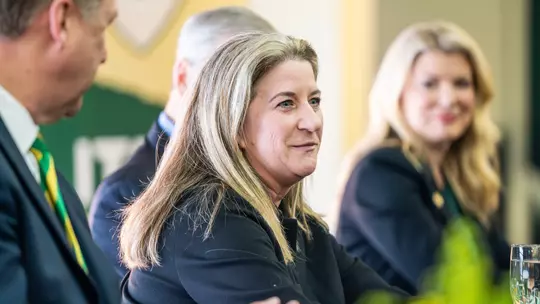
A Reimagined Pac-12 Looking Forward
Colorado State proud to join conference Gould refused to let die
Mike Brohard
As step by step the process unfolded, the outside world looked at the situation dumfounded. Definitely stunned. The opening salvo came with the announcement a pair of schools were leaving the Pac-12. Then another. Then a handful more, all in a span of less than two months. Then a month later, a few more hit the road.
The Pac-12, a conference with more than a century of tradition had been decimated to a point most figured it was set to become a relic. A memory. A footnote.
What the world watched from afar, Teresa Gould bore witness to from inside the building.
“When you go through something that difficult and that unprecedented, there are definitely moments where you kind of replay everything in your head and try to figure out how did we possibly get to this point?” said Gould, who has 25 years of her professional life tied to the conference. “It's hard to kind of wrap your head around, and I think for the longest time, to be honest, I just … It didn't even feel real.
“It just felt so incredibly unprecedented,. Crazy. Like, did-this-really-happen kind of thing for the longest period. So I'm really excited that we are approaching July 1 and turning the page and have all these exciting, happy memories in front of us. But yeah, it was a very, very difficult time, both personally and professionally for sure.”
When Gould was elevated from deputy to the commissioner of the Pac-12 on March 1, 2024, she said everything perfectly to the public. When the conference was down to two schools, she noted she was going to find the best avenue forward for Oregon State and Washington State. It was what she had to tell the world.
In her mind, the task was clear. One steeped in emotion and a sense of duty. A plan the outside world would view as at the very least unlikely, if not impossible.
“I guess publicly, I felt like it was important and it was actually accurate that I was considering and pursuing any and all options that would make sense based on where they were sitting in the industry and kind of what they wanted their future to be,” Gould said. “But privately in my heart, I never really considered it. In my heart, it was we need to rebuild this thing.”
Which is what Gould – recently extended in her role through 2030-31 -- did. The timeline in rebuilding the storied conference mirrored the process which had seemingly signaled its demise. She was named commissioner on March 1, 2024. On Sept. 12 of that year, Colorado State, Boise State, Fresno State and San Diego State announced they were joining. A few weeks later, Utah State followed. A few weeks later, Gonzaga was in for everything but football, and by the end of the summer, Texas State’s arrival made it a full league again.
“I was like probably most individuals in sport who were following that from a distance. And by that I thought, wow, what a roller coaster. Are they going to make it? Are they not going to make it? How are they going to rebuild?” Pac-12 deputy commissioner Rick Hart said. “Again, it was falling from afar. I remember when Teresa -- and I didn't know Teresa before I interviewed for this role -- but I remember when I saw that she had taken on the leadership role as commissioner, I thought, wow, she's courageous and God bless her, right?”
Now sitting in the offices with her, the picture becomes clear of not so much how it happened, but why Gould was able to resurrect the Pac-12.
Courageous was the first word he used. Relentless. A grinder with incredible integrity who is passionate about student-athletes. Now the how and why is crystal clear.
She needed partners, universities willing to take this leap of faith with her, much the same way a large group of conference employees stuck by her at a time when she could give them no clear answers. The sales pitch had to go beyond intriguing to believable and sustainable.
Colorado State Director of Athletics John Weber listened, intently. He took notes. Held side conversations about what it would look like and how it could come together. Answers started to fall into place that the move wasn’t actually risky, but a necessity.
“It was an opportunity for Colorado State to take another step forward as an institution, not just as an athletics department, but as an institution. It's certainly where we ended from a media perspective,” Weber said. “The distribution, the reach that we're going to get as a result of having every single one of our football games on linear television, a significant portion of our basketball games on linear, championship games on linear, that's the goal for us. That's why we exist. When I say we, I mean athletics.
“Athletics is here to market the university, to attract and retain the general student body, to engage with the community, to build school pride, all of those things. We looked at that, we looked at that opportunity, and it was clear that that was going to be a step in the direction that CSU as an institution needed to take.”
Now they’re all in this together. The league is repopulated, but the building has just begun. Moving forward involves keeping aspects of the history of the league intact while building the pillars to strengthen the future.
There are some semantics involved. The Pac-12 is not the same, but it still exists. Gould has spoken about the idea of creating the first conference in nearly 25 years, doing so under an existing brand. In short, the two notions are one in the same.
The brand is important. Admitting it may come across as arrogant, Gould said it stands for the preeminent conference in the West, carrying with it a tradition of excellence in women’s and Olympic sports. A conference which is a leader in innovation, following the history of a pioneering region, a group which initiates a change in thinking. The first conference with student-athletes as part of the governance structure. The first to propose post-eligibility medical support, even the idea of NIL.
“I say that because I think that this league, there has been a mindset or a DNA that is different than any other league in the country. And I don't want that to die,” Gould said. “I think the institutions that are coming in to help reimagine and relaunch this league still embrace those values and those ideals.”
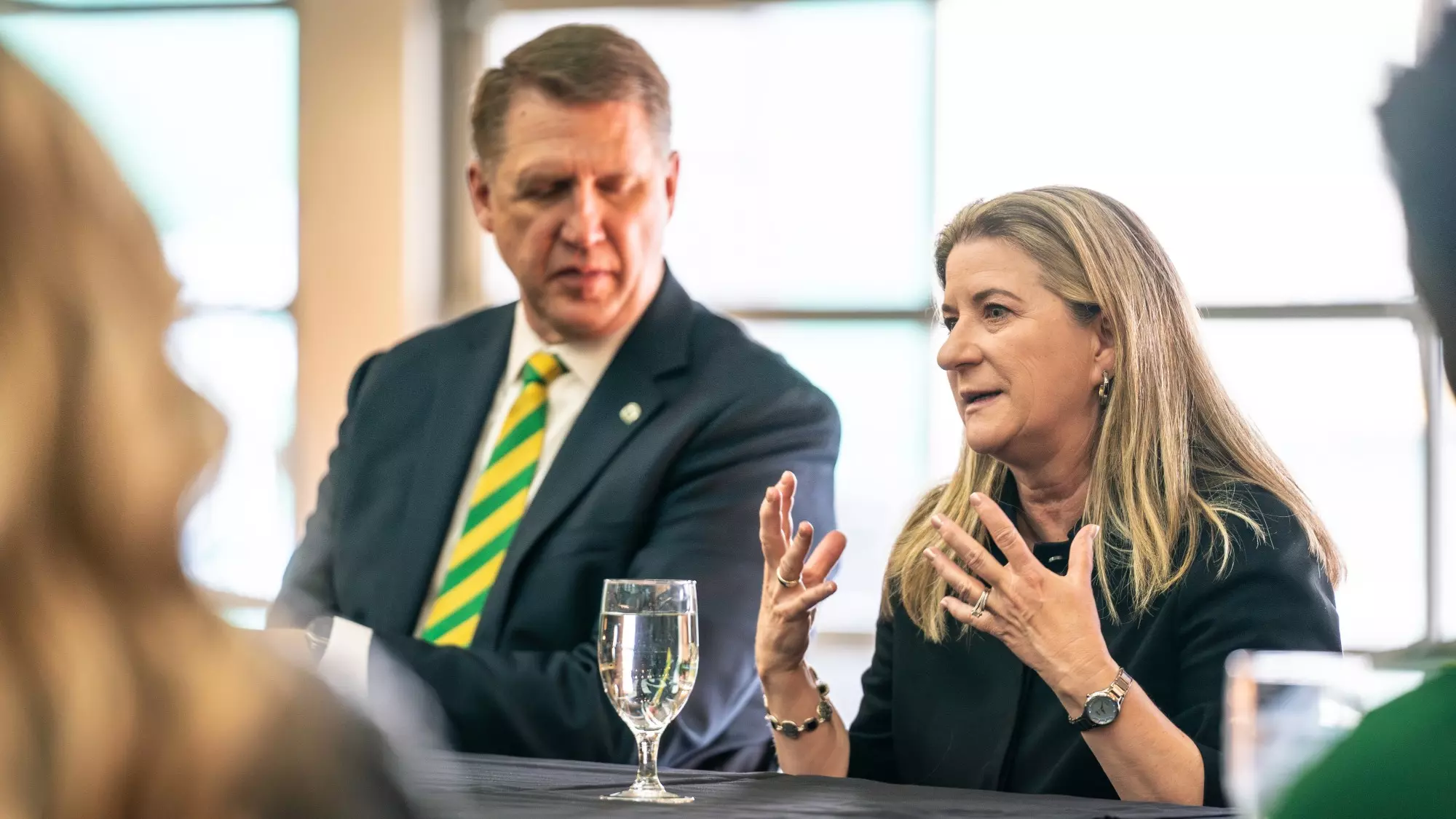

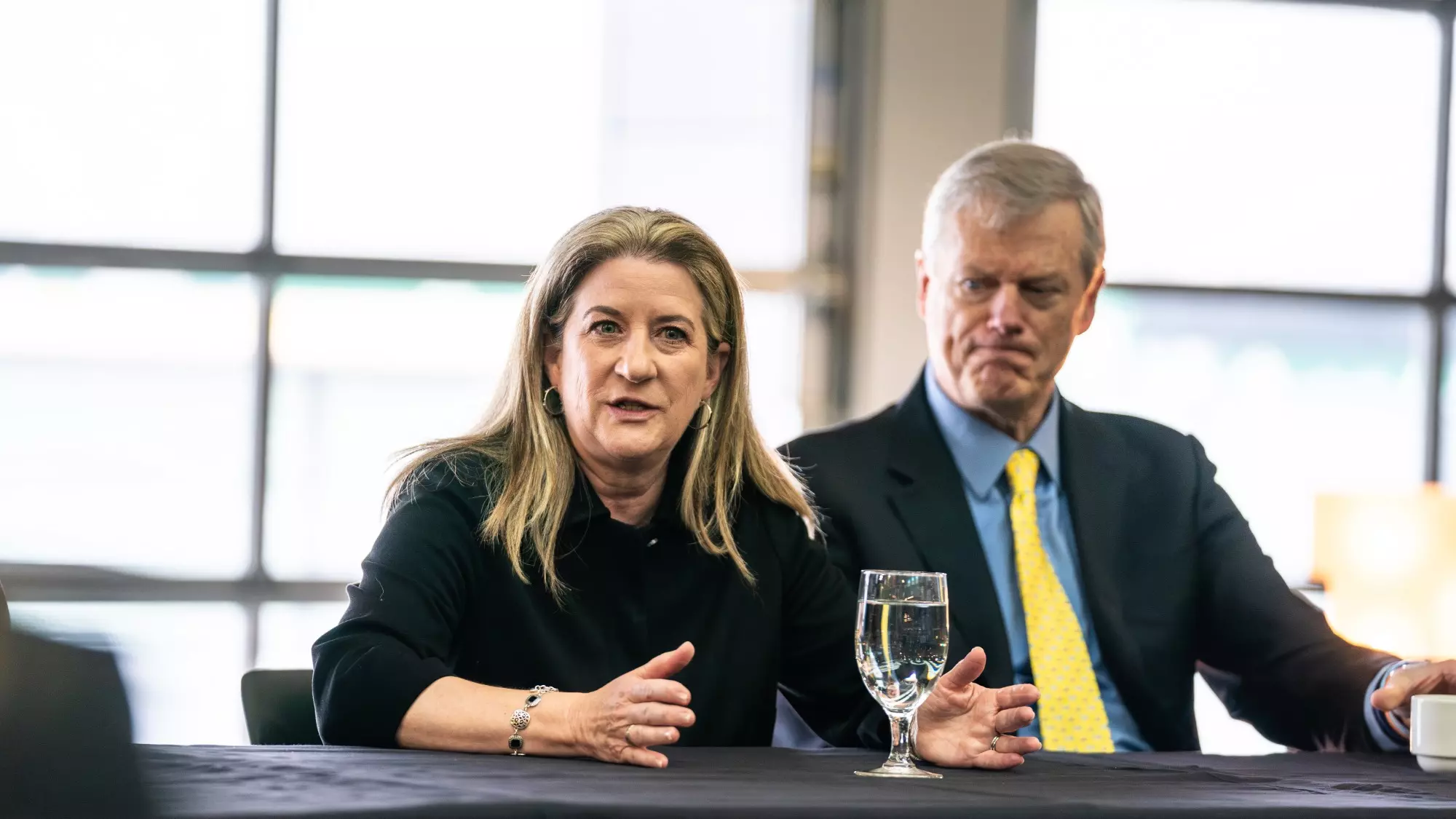
I say that because I think that this league, there has been a mindset or a DNA that is different than any other league in the country. And I don't want that to die.Teeresa Gould
Hart embraces those lines of thought. He read the book ‘Think Wrong: How to Conquer the Status Quo and Do Work That Matters’ because he knew the staff at the Pac-12 had done so. It fell in line with a favorite of his, ‘Built to Last.’ Merge the ideas of core preservation while stimulating change.
Rebuilding the league meant Gould had to challenge the thinking of others, even inside the walls. To do so intentionally by being proactive with an eye on the future. Not just for the league, but college athletics as a whole. One may not be able to predict the future, but preparing for change is a necessity.
It was change which nearly wiped out the league. Understanding what’s next is what may sustain it and fuel its growth through the next wave.
What the Pac-12 will hold to tightly is being student centered, with the student-athlete experience remaining a core value. The student, Hart said, comes first. Then the athlete, but a third component is the player, the one who is now armed with the ability to monetize the opportunities presented.
The league wants to continue to challenge the norm. And a third component is to be relentless, in everything it does. Not just as individual institutions, but together as a group. Additionally, do it all by being flexible. Long-range plans are outdated in short order these days, but the Pac-12 will be aggressive about what it pursues in the next three-to-five years.
All that leads to a fourth part of the new foundation.
“You have to be adaptable, so you have to consistently revisit, again, your strategy, your priorities, your goals, and make sure they continue to be aligned with the environment. And if they're not, you have to have the ability to pivot,” Hart said. “I do think that because we're a small league, eight football, nine full members, we have the ability to do that in a way that other conferences don't, so that will be very important. That kind of gets to the next value that I want to talk about, which is open-mindedness.
“Yes, we have to have a plan. Yes, we have to be clear about our vision, our mission, our goals, but we also have to be open-minded about how those might evolve and also what we might contemplate that we've never contemplated before. So we have to be open-minded. We have to be connected.”
Old and new at the same time. In the conference offices, they refer to it as where tradition meets transformation. The universities which make up the Pac-12 on July 1 differ from those of the past, but the brand still stands. For many, being true to those foundational values is vital to moving into the future of college athletics.
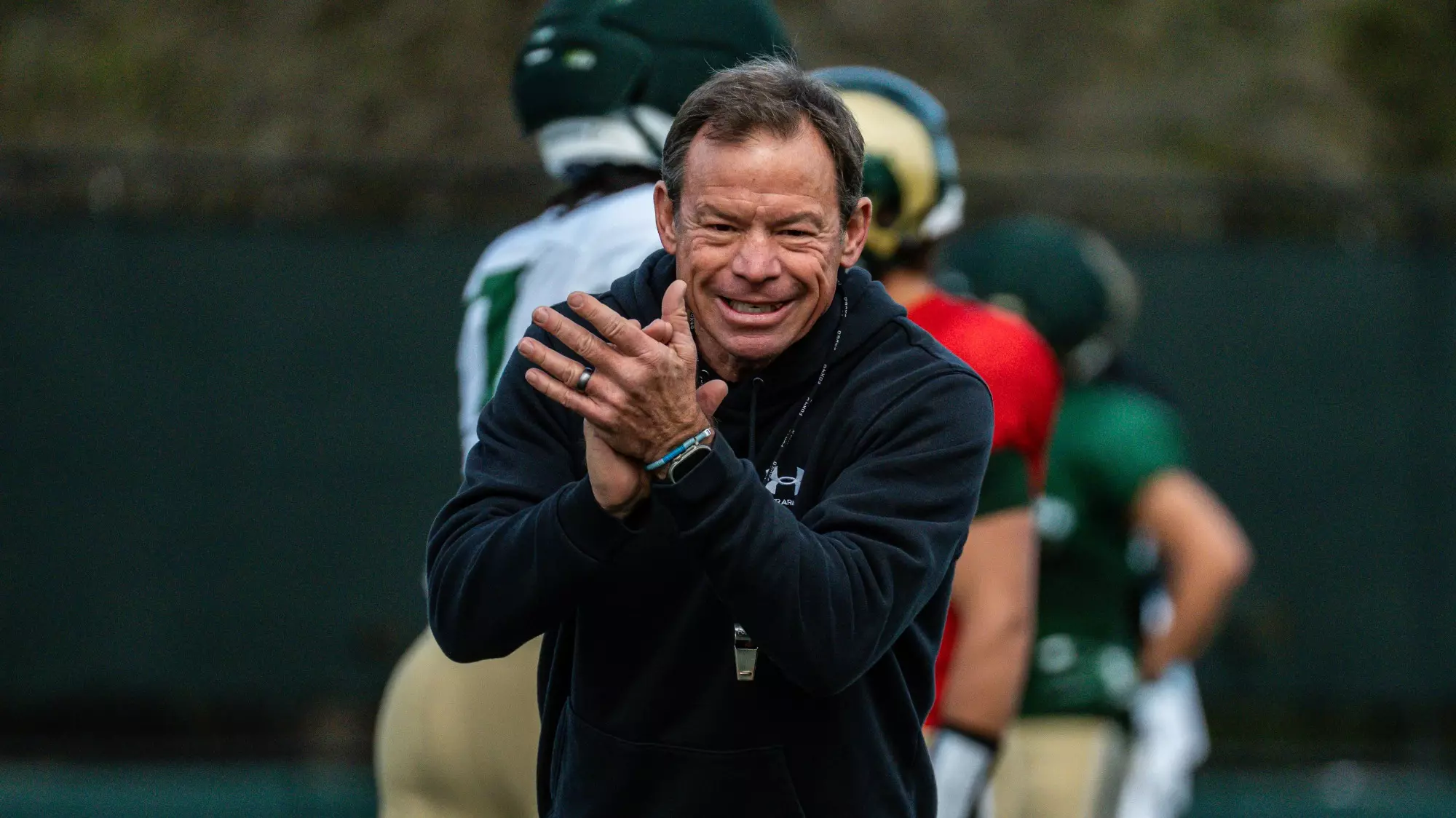
That name remains. So, too, what made it revered. Colorado State football coach Jim Mora believes that to his core.
“I've been associated with the Pac since I was a kid, because my dad coached in the Pac-8. I played in the Pac-10, coached in the Pac-12, and I'm back in the Pac-12,” he said. “It's always been a very prideful conference -- the Conference of Champions, as it used to be called.
“There's always been a great focus on the Olympic sports, certainly, and how successful they've been in Olympic sports. But I also think when you look at basketball, and you take into consideration the great success that UCLA had, and football with USC, Washington, Oregon, teams like that. It's a national brand, and I'm excited to see it built back up to where I believe it belongs, which is right up there with the SEC and the Big Ten.”
The autonomy status the league once is held is gone. It would like to regain it in the future, though both Weber and Gould say the specific definition could be altered in the coming years. Whatever it becomes, the Pac-12 wants a seat. For Weber, that’s a top goal.
Expansion will always be on the table and discussed with intentionality. Gould said the league will not solve operational problems with a long-term strategic decision. The Pac-12 will remain in the market, but activity will be based on the notion of building what she called the new model of college athletics.
The reenvisioned Pac-12 is a collection of universities aiming at pushing the norm and pursuing the national spotlight. It is the reason, Weber said, the flex week in football was designed the way it was and why the championship game will be hosted by the higher seed, trying to pave a path toward College Football Playoff opportunities. He said the same approach will be used to enhance chances in the Olympic sports.
“It's just the start. It's a moment in time that I think we can all be proud of, but that's when the work really begins. As we go into the Pac-12, it's going to be the same for any of the member institutions,” Weber said. “We're all here to compete and win. We're all serious about the future of our own institution. It's a good group of ADs. It's a good group of presidents. It's going to be really fun to see the league come together and compete against each other.”
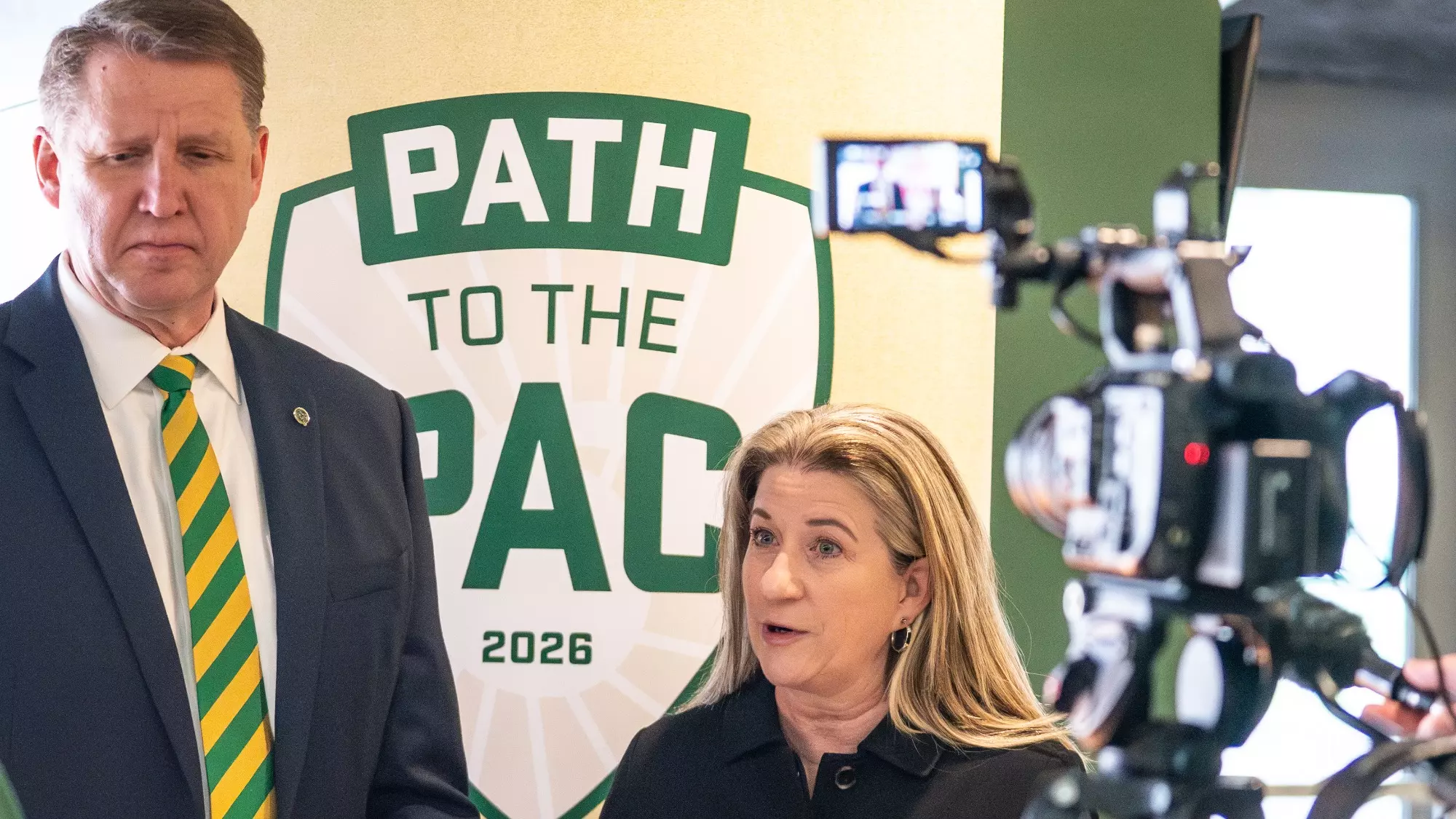
Today marks a monumental day, with the new Pac-12 officially in business. The members will celebrate, as will the entity itself. Once viewed as beaten and broken and kicked to the curb, it stands tall as a survivor should.
As important as the day is, it is not the one Gould herself has awaited. Many of the emotions tied to such an occasion passed for her when the first wave of four teams pledged their allegiance. It was then her quietly held belief she could resurrect the league came true.
The days she looks forward to most will come after. When teams compete as members of the Pac-12 in soccer to start. It carry deeper meaning when the first two champions of the rebuilt conference are crowned at the cross country championships. Gould will be there to celebrate the victors.
“The thing that is the most gratifying to me is I've always felt like the student-athlete experience in the Pac-12 was unduplicated in our industry, and I can't wait to deliver that to student-athletes on these nine campuses,” she said. “So I'm the most excited about competition starting and handing off that first trophy.”
An act representing a step into a future for a conference where many had penned its obituary. All born from a woman who personally made it her goal to make sure the book on the Pac-12 wasn’t shelved, that there were still pages to turn.
Support Colorado State Athletics: Tickets | Ram Club | CSU NIL Marketplace