
More Than What’s on Paper
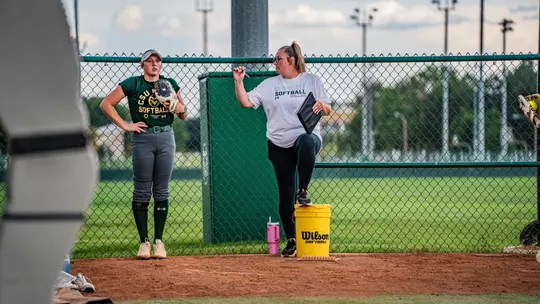
Taylor Gilmore’s understanding of the game defines Colorado State’s pitching room
Liv Sewell
When evaluating a resumé, background in the position is often the most important piece of the puzzle.
But look a little deeper, and that knowledge can come from places other than years at the helm as a coach. Because as helpful as surface-level evaluation can be to weed out candidates who obviously don’t fit the mold, the real challenge starts when looking for a true emblematic representation of what you need.
What Colorado State softball needed was a pitching coach.
It didn’t have to look very far though. There was someone who knew the ins-and-outs of not only the Ram dugout, but the Mountain West as a whole: Taylor Gilmore.
She is two years removed from her playing career, but it doesn’t mean she is without spades of experience.
Not only is she a former Ram who spent four years on the roster from 2019 to 2022, she spent two years at Fresno State where she won Mountain West Pitcher of the Year in her final season.
She took her first jab at coaching at San Jose State, but CSU has always felt like a home.
“It's been like a dream come true,” Gilmore said. “When I played here, I didn't have a lot of opportunity on the field because of injury, COVID, all of the different things. So Coach Fisher was nice enough when I was playing to continue to loop me into the coaching conversation. When they called, it was a no brainer. I get to come home and coach with my family.”
But as much as pitching is a learned skill, so too is coaching.
Except, she had that covered as well.
During her time with the Rams, injuries kept her off the field, but not out of the game. Her contributions extended beyond the circle, where her perspective became just as valuable as her performance.
“She has a coach’s brain,” coach Jen Fisher said. “We're always talking about it's not what happens to you, but it's your reaction to what happens to you that determines your attitude. And I think she really epitomized that, like even when she was hurt and she wasn't traveling necessarily with the team…she was studying film for us. She was constantly reading the pictures and trying to help the hitters understand, you know, this is what the changeup looks like. And so, I think she's just always done what she could with what she has.”
In that way, her stop at SJSU didn’t paint the whole picture. She had been studying other pitchers and helping hitters with their reads before getting a salary. It wasn’t out of obligation, but instinct.
And it shows up in her perspective too.
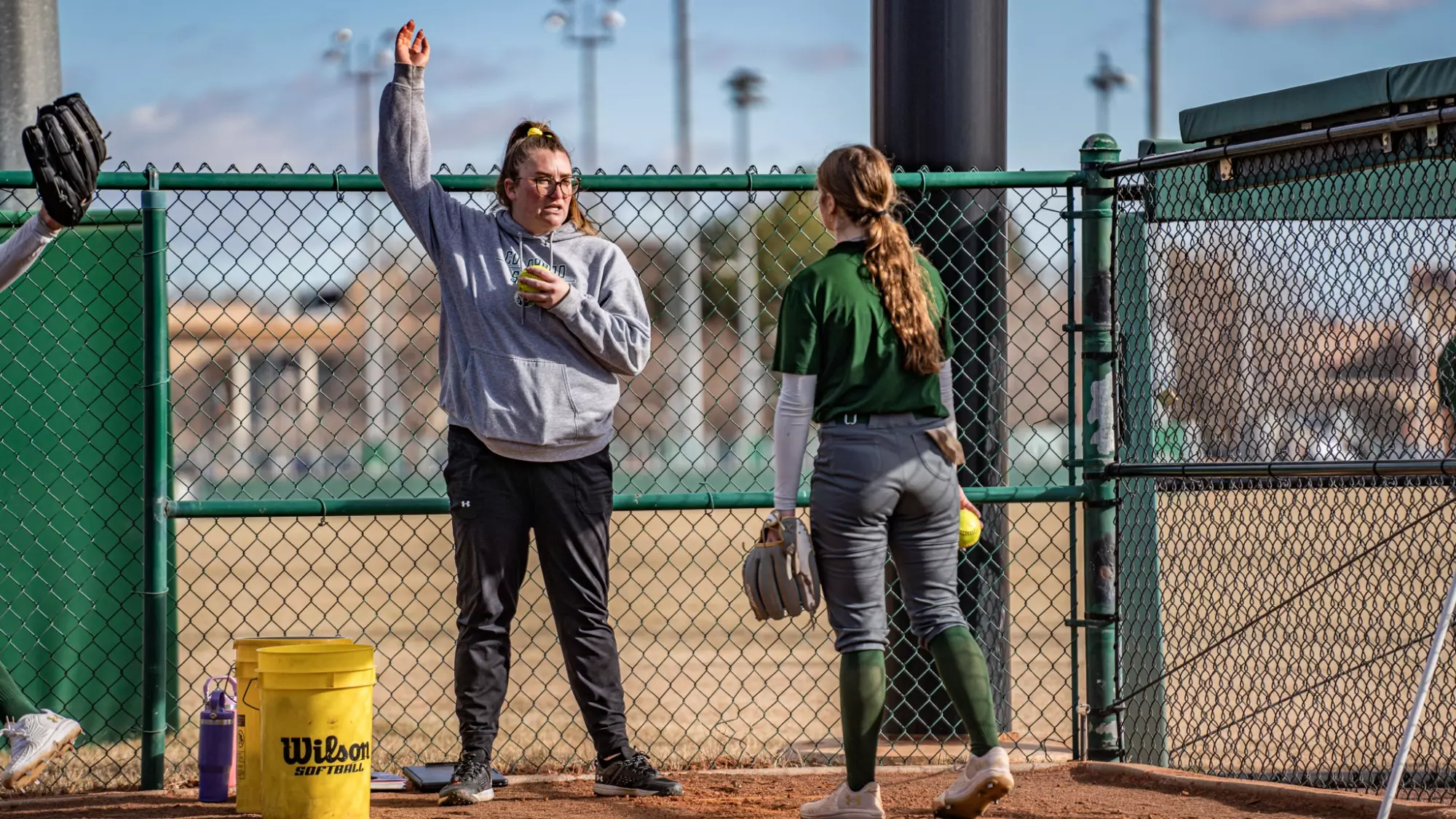
“Whether it's telling them, I believe in you or you can do it and fight,” Gilmore said. “We talk a lot about just competing. And I think, the more that we can simplify the game, the better that we're going to be.”
CSU puts a lot of weight on simplifying seemingly convoluted things.
Because the goal is always tournament play, but getting there comes by investing in the small steps on the longer winding path. A path Gilmore has taken before.
“Coach Taylor was here when they won conference in 2019,” Reagan Wick said. “So to be able to get her experience in that and to be able to carry it over till now is such a great thing. It's just given us more inspiration than it can be done, and we have someone that went through it and she knows what it takes to get there. So, she can impart that wisdom onto us, which is awesome.”
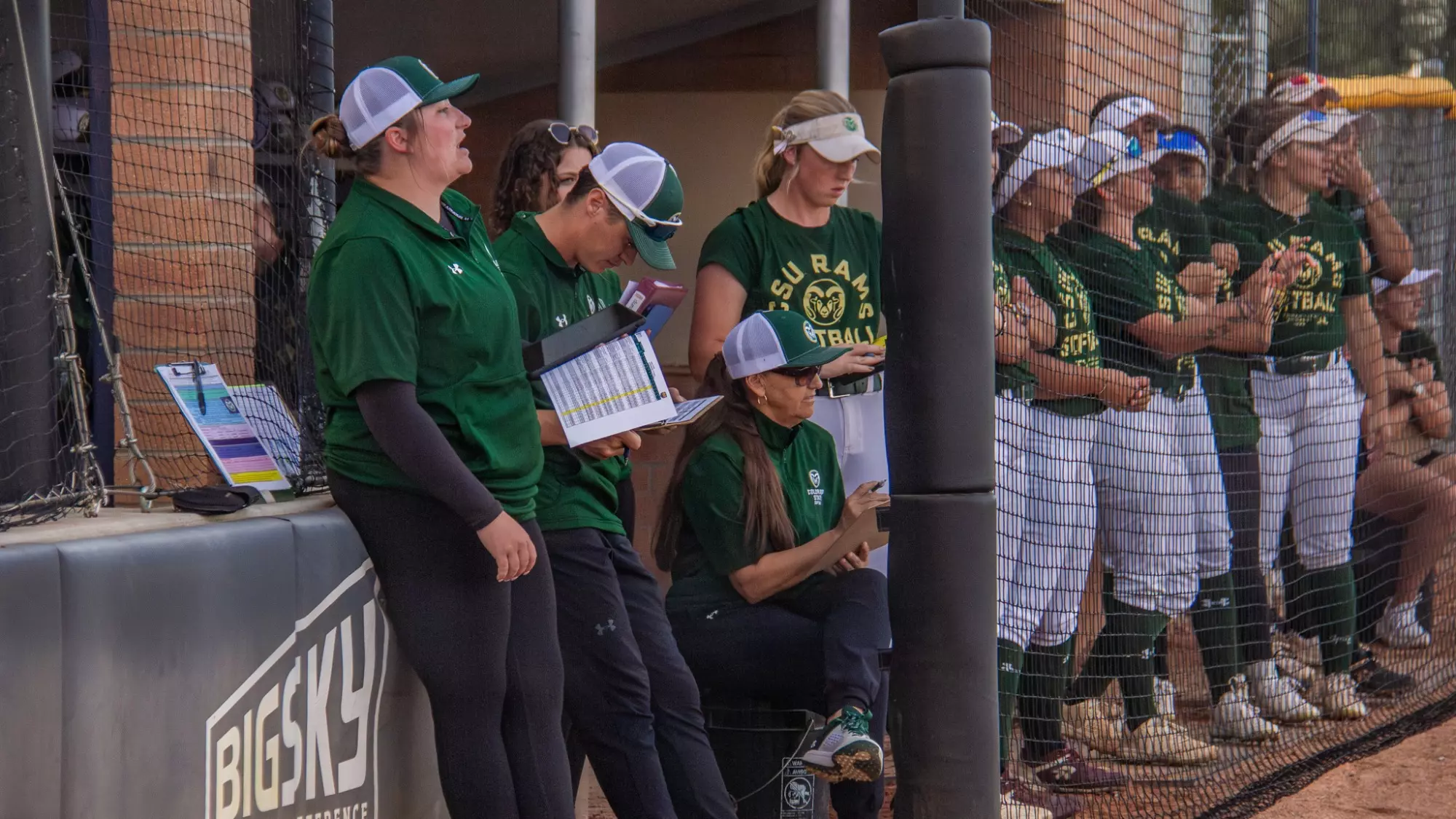

You know, looking forward, the sky's the limit for us.Taylor Gilmore
Her sagacity comes from time in those high-pressure situations where championship trophies were on the line. And having someone with that recency — a person seven years removed from playing a Tournament Championship — gives everyone, not just pitchers, a different outlook.
Take Kaylynn English for example. In her third year, she embodies the consistency needed at the shortstop position. A spot which requires constant communication with southpaws like Wick.
“Obviously, (Coach Taylor’s) great,” English said. “She's great at just pitch calling, everybody knows that. But also, she impacts their mentality and just focuses on their mental game. And I've seen it in especially Giselle and Reagan. They are so much more confident this year and they're doing amazing. And I think that that comes from the guidance of Coach Taylor.”
And it remains two-sided.
The best kind of coaches know learning doesn’t take a backseat when in a leadership position. You are in control of the conversation but continue to listen to the players which embody it.
“I think our upperclassmen right now, the girls who do have experience, I really, really lean on them to explain to the girls what they're feeling, what they're doing, what they're seeing when they're on the field,” Gilmore said. “So that when someone else goes on the field, they know what to expect. And I think the way that we can just continue to do that is whenever someone gets an opportunity, we're all talking to each other, and we all talk about every little nitty gritty thing.
“I'm very communicative. If something doesn't work for you, let me know, we'll change it. And then vice versa, if you're doing something I don't like, we're going to change it.”
Breaking through the often-uncomfortable step of recognizing faults helps foster growth.
A season ago, the circle was defined by fluctuation — strong outings followed by unraveling ones, ERAs stretching across the roster and a 9-12 mark in conference play to end it. Now, the volatility has started to settle, due to the division of labor.
“Coach Fisher and all the coaches did a fantastic job without necessarily having like being a pitcher," Gilmore said. "I was able to walk in and talk to them and kind of add like that mechanical aspect to what they were thinking and how to get there. And so, a lot of what I do is, I get to just take the pitchers and it's less stress for everyone else. ”
The change shows. This season, CSU sits at No. 4 in the conference at 8-6 on a three-game win streak showing how every edge matters. Gilmore’s familiarity with the league is one of them.
Not long ago, she was pitching against these same teams.
Now, she’s calling the game.
“I think the most beneficial thing about the Mountain West and the coolest thing about the Mountain West is that it is so competitive,” Gilmore said. “I would never want to be in a conference where you know who's going to win straight out the gate. I enjoy the week-to-week fighting for every single game and it wasn't like that before the tournament. And so, I'm a huge fan of the tournament. I think it makes everything more competitive. But, you know, looking forward, the sky's the limit for us.”
The passion she displays for the game rubs off on her players and brings them even closer. Because though there are eight pitchers on the roster, each requires a different kind of conversation.
Sometimes it’s encouragement. Sometimes it’s accountability. Sometimes, it’s showing them exactly how it’s done.
“My husband played baseball as a pitcher and he learned he needed to continue learning while coaching,” Fisher said. “He was like, ‘I learned how to throw a curveball so I could teach other people.’ So sometimes, when that time passes us so quickly, it’s good to hold on to it. If you have to teach something, it's amazing to show you can do it.”
That ability to meet players where they are — whether through words, experience or demonstration — is what separates instruction from connection.
And for a pitching staff built on trust, it’s a distinction which matters.
“I would say we're just like our own little family,” Wick said. “So we just continue to support one another throughout whatever the situation is, we're always behind each other no matter who's pitching, no matter who's warming up, we're all there for each other the whole time.”
And in a sport where success is often measured in numbers — innings pitched, strikeouts thrown, games won — Gilmore’s impact shows up in something less tangible but easily spotted.
Not just in how her pitchers perform, but in how they think, how they communicate and how they carry themselves in the circle. Because sometimes, the most important experience on a resumé isn’t what you did, but how you learned from what you couldn’t.
It’s learning to look beyond a career laid out on paper and realizing the best fit started preparing for the job even when no one was looking.
Support Colorado State Athletics: Tickets | Ram Club | CSU NIL Marketplace