
The Goldfish Mentality
How the Rams reset to grow together
Liv Sewell
When approaching an athletic feat, being forgetful can be helpful.
Not of the training it took to get there, or the cues which have been meticulously practiced — but of the unchangeable results of the past. The misses or losses which everyone who has ever won has experienced.
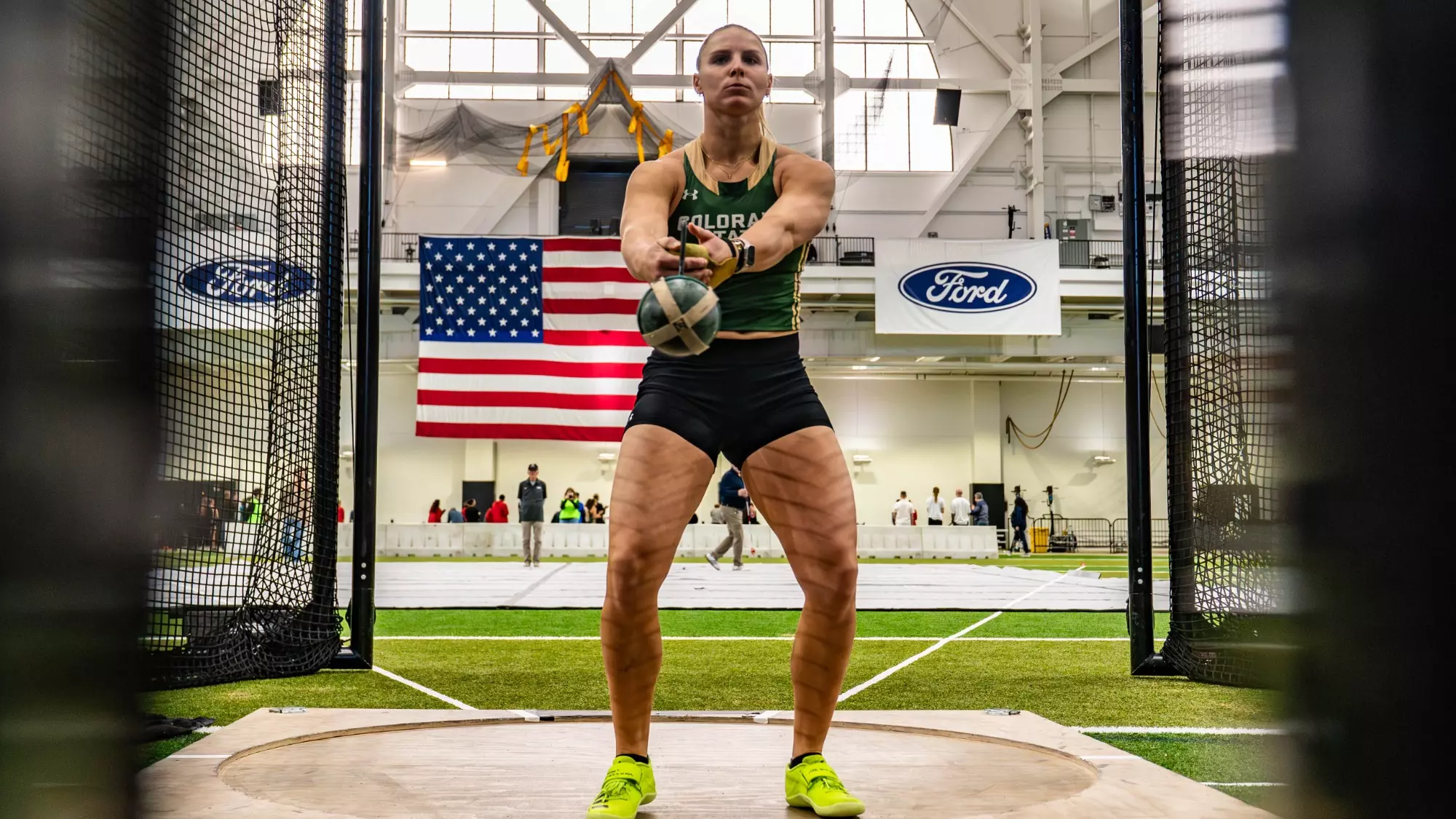
At Colorado State, the throwers like to describe it as taking a lesson from a classroom pet.
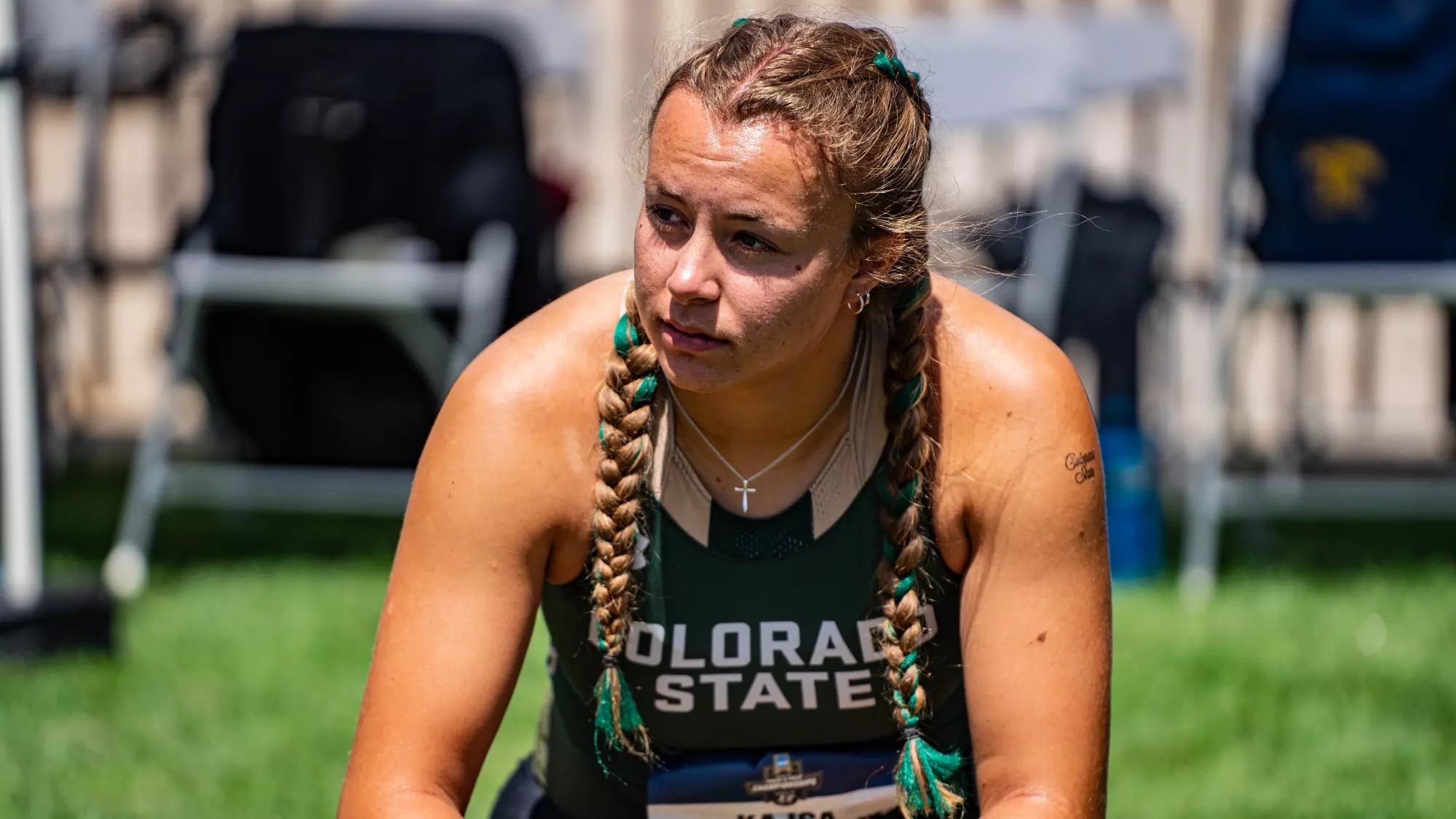
“It's such a huge deal to kind of have goldfish memory,” Kajsa Borrman said. “You only get three attempts. And if you make it to the final, then you get six. But if you have a bad attempt on the first one, then you have to just forget about it. Because every attempt is a new attempt. And I think most people just kind of think, oh, you're a thrower. You're just big and strong and you throw as far as you can. But it's actually kind of like a little dance.”
Bormann recently finished sixth in the weight throw at Indoor Nationals. She and her teammate Makayla Long – who was ninth at nationals in the shot put -- both qualified with their throws at the Mountain West Indoor Championships.
For both athletes, the success at conference represented months of training and competition building toward a single moment.
Having those two first-place finishes felt like a true representation of their indoor season.
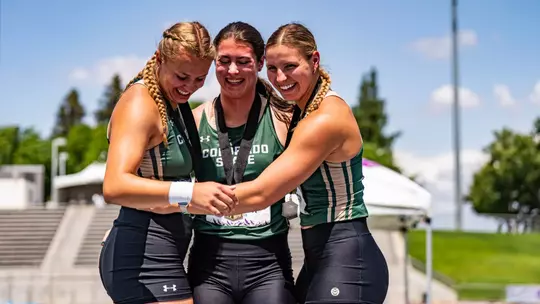
“When you get to conference, it turns into a team performance,” Long said. “During the season you're just focusing on how to go about your individual process, but when you get to conference, it's about performing for your team and scoring as many points as possible for your team. So, for us to be able to come away with two first place finishes with 20 points, it just meant a lot.”
Track doesn’t always appear to be a team sport from the outside.
The events seem disconnected — sprinters on the track, distance runners circling lap after lap, throwers working on a field across the facility. Each athlete competing in their own discipline, focused on their own result. But inside the arena, the reality feels different.
During indoor meets, the events take place within the same building. The crowd noise echoes across the track, and athletes drift between events to watch teammates compete. Even for someone on the quieter side of the team, the environment can draw them in.
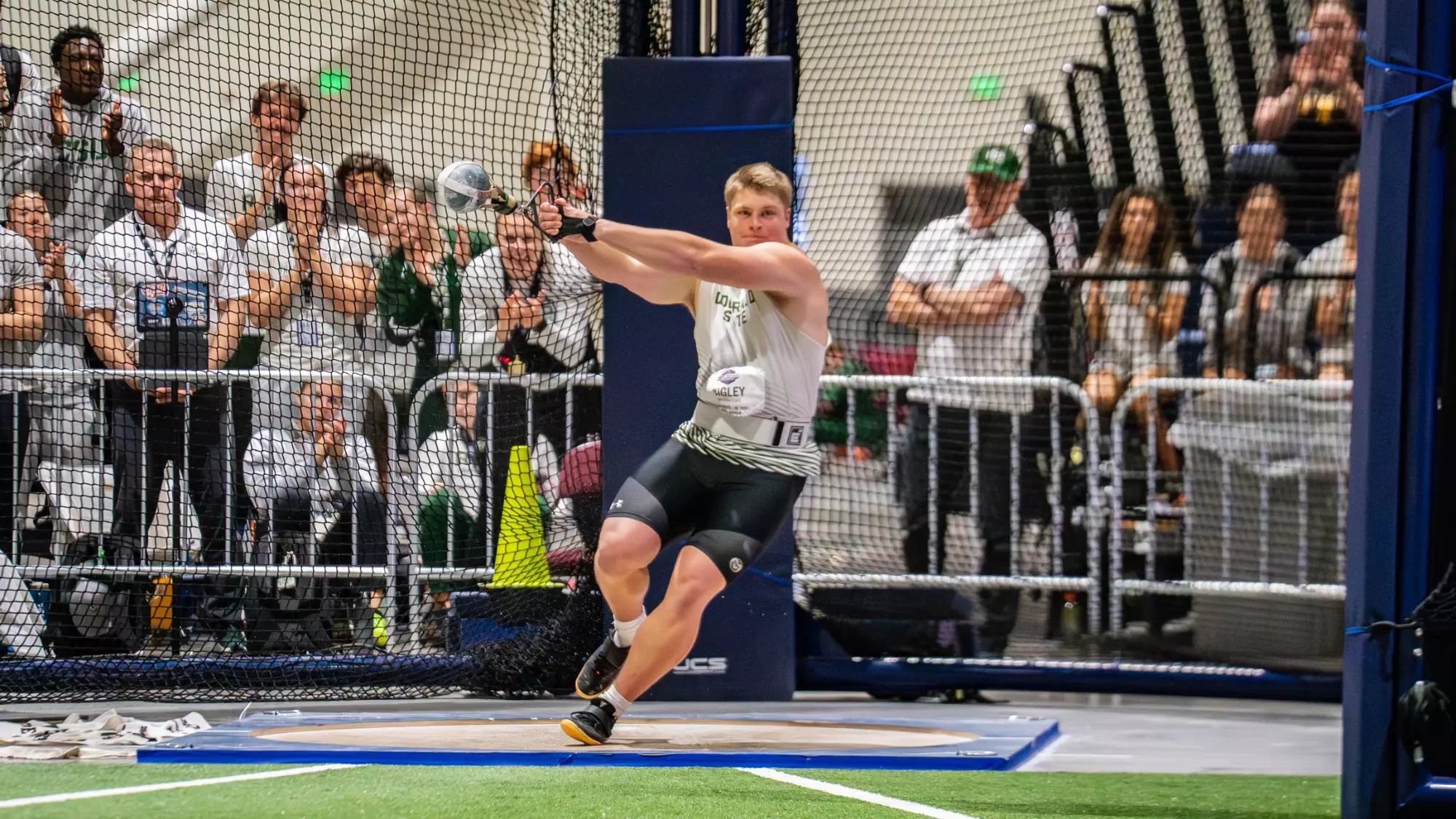
“I'm a pretty shy guy. I'm kind of an introvert,” Kyle Bigley said. “I'll tell you what though, I love watching people I’ve known since freshman year go out and do their thing. I'll go cheer all the runners on, the distance kids, and then what do they do? They come and cheer us on, we're throwing and then after the meet, we just shake hands. We're all excited for each other. It just builds kind of like a brotherhood almost, where maybe you don't know them, but we're teammates.”
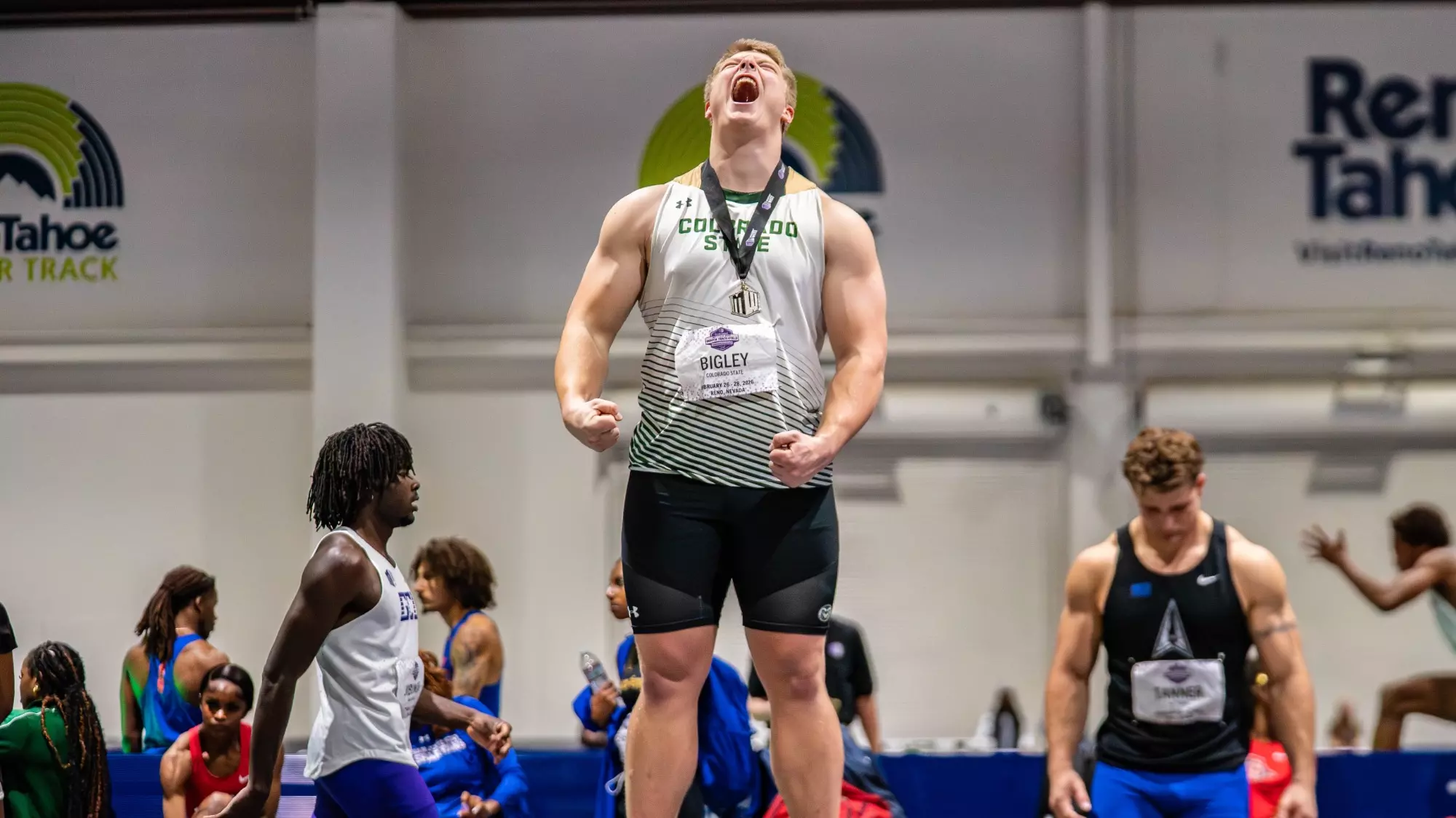
A sense of camaraderie becomes especially visible during big meets, when every event contributes points toward a team score. Bigley earned a personal best in shot put at the indoor meet and had his name entered into the CSU record book at fourth all-time at 19.01/61-3.5 along with a podium appearance and bronze medal. His throw helped the men’s team secure valuable points in the standings, eventually contributing to a first-place finish.
Moments like that can shift the momentum of an entire meet.
But the energy surrounding the team doesn’t only appear once competition begins. The atmosphere often starts the moment the athletes arrive.
“As soon as we walk in the building, everybody knows CSU is there,” Bigley said. “And honestly, you kind of have to bring it. Because you don't want to sit in the corner, you have to bring your energy, and that's just how the Rams are. We've got energy, we're good competitors, that's just how it is.”
While the sport is often reduced to strength alone, success in the ring requires far more than raw power.
An athlete might have several minutes between attempts, watching competitors take their turns while waiting to step back into the ring. That waiting period can give doubt time to creep in.

If you have a good throw, you just never know. That's kind of the exciting part of the sport. You just go in and do it.Kyle Bigley
Or it can be an opportunity to reset.
Throwing is lifting and launching heavy weights across a field, but it also requires a mental discipline that must be practiced just as much. It helps when both teams — the men’s and the women’s — are seeing success, as it only helps them push each other further.
“I went to Baylor previously, and I loved my time at the university, but as far as the team atmosphere, I didn't have any throwing teammates,” Long said. “That was just really draining to be at a meet. You go into the ring, and you compete, and then you come out and you're by yourself. You're isolated with your thoughts. So the biggest difference coming here to Colorado State with the amazing throwers crew is you get to go in and compete. You have your teammates cheering for you right there. You walk out of the ring, and we're laughing.
“If you see half the pictures that our media team takes, we're laughing our heads off on the side. And that means a lot because it's all about joy. You can have fun on the side and then lock in when you step into the ring. And so it's a huge piece of that having teammates there supporting you.”
It’s possible to have both.
To be a focused athlete, and a funny friend. A serious competitor and a respectful sportsman. To meet up on that podium with friends and smile a true smile.
To push each other past preconceived limits.
“For instance, at the outdoor conference championship, Kaisa threw a huge 53, and that elevated the competition to start it,” Long said. “And Klaire (Kovatch) goes out and throws a 57, and then I ended the competition at a higher 53. So, it just elevates the competition every time your teammate goes out and throws a big number. Then it’s, I get to step up that level of competition as well.”
In moments like that, the competition becomes collaborative.
One big throw raises the bar for the next athlete stepping into the ring. Teammates celebrate each other’s success while simultaneously pushing themselves to go further. A sense of unity which becomes even more noticeable when the team transitions outdoors.
While indoor meets pack every event into a single arena, outdoor track spreads athletes across an entire complex — from the throwing fields to the far end of the track where distance runners circle lap after lap.
The events may look disconnected from the outside. But for the athletes competing, the support system remains the same.
“It is a really long season,” Long said. “It helps a ton because some meets, you'll maybe throw a discus hammer, some meets you'll throw all of them, some meets you'll throw one event. So Bedard does a good job of managing that with us. But any sport, especially a technical sport like this, is 90% mental, 10% physical. So to keep your mind fresh and engaged is super important.”
And in a sport measured in inches and centimeters, that ability to forget can be the difference between standing in the middle of the pack and stepping onto the podium.
So the athletes step back into the ring. They block out the noise around them. And for a few seconds, everything narrows to a single motion — a practiced spin, a burst of force and a weight flying through the air.
“If you have a good throw, you just never know,” Bigley said. “That's kind of the exciting part of the sport. You just go in and do it.”
The throw lands. The crowd reacts. And almost immediately, the process starts again.
Because in throwing, the past does not travel with the athlete.
Only the next attempt does.
Support Colorado State Athletics: Tickets | Ram Club | CSU NIL Marketplace